Originally by Robert Chaney, Mountain Journal at montanafreepress.org
The federal shutdown that started Oct. 1 left large swaths of public land accessible but unstaffed as Congress fought over the 2026 budget. That temporary situation could become the new normal, according to plans published by the Trump administration.
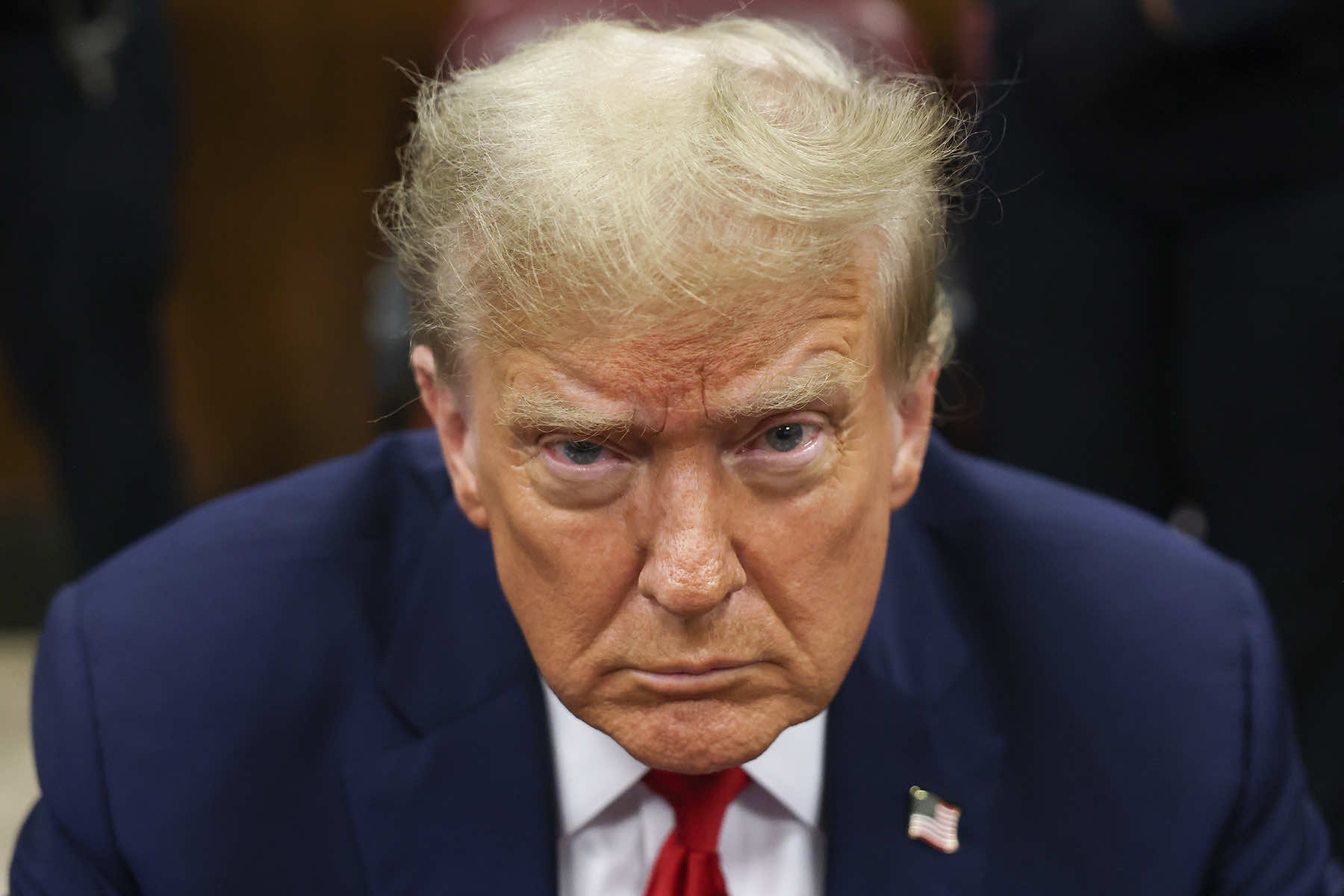
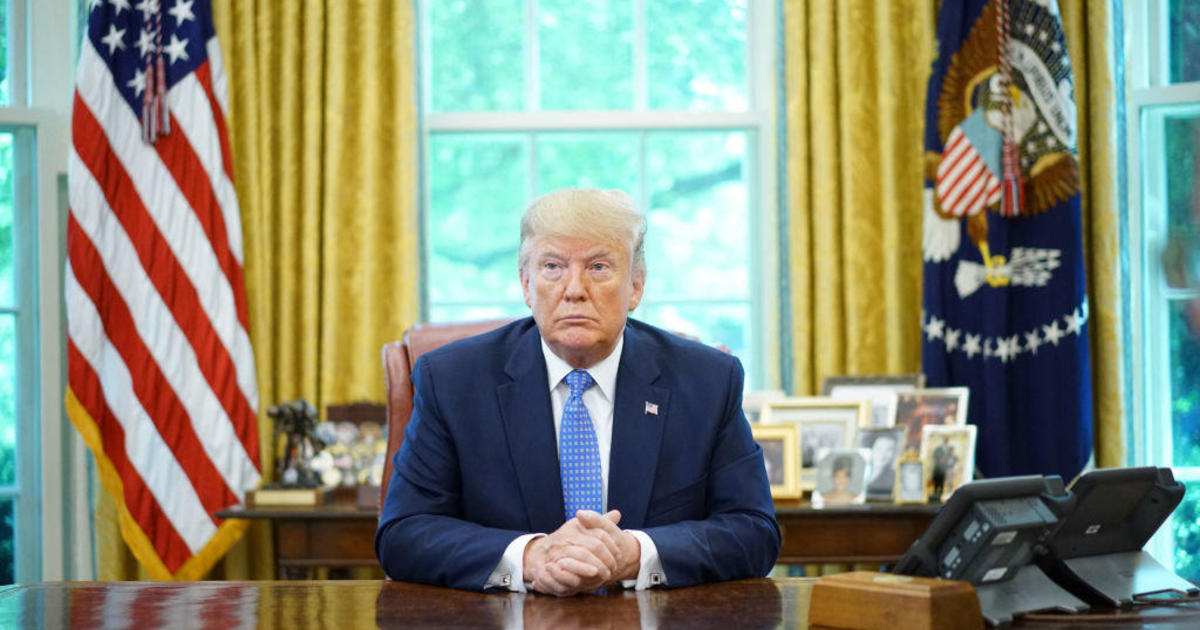
On Oct. 2, President Donald Trump posted on Truth Social about meeting with Office of Management and Budget Director Russell Vought to “determine which of the many Democrat Agencies, most of which are a political SCAM, he recommends be cut.” Those potential cuts would mean big changes across the public lands of Montana, Wyoming and the Rocky Mountain West.
For example, the Department of Interior is responsible for national parks, recreation areas and millions of acres of grazing and mining lands. Last month, Secretary Doug Burgum declared plans to shrink its workforce in October. He reiterated that in an Oct. 3 interview with In Depth Alaska. “We have an effort underway to find more efficiency in reducing government services,” he said. “The president does have more authorities during a shutdown to take dramatic action.”
The Department of Agriculture, which houses the U.S. Forest Service, had parallel goals. Agriculture Secretary Brooke Rollins’ reorganization plan was going through a public comment period that ended Sept. 30 to gauge stakeholder response to decentralizing the multiagency department into five regional hubs and eliminating the Forest Service’s regional office structure, which includes the agency’s Region 1 headquarters in Missoula. Thousands of jobs nationwide were expected to be eliminated in the process.
The congressional shutdown and presidential agenda are moving into uncharted territory, according to political analysts.
“This looks like a major historical change in the dynamics of Congress,” Montana State University political science professor Eric Austin told Mountain Journal. “The number of institutionalists in Congress, who paid attention to the separation of powers and checks and balances, has shifted. Today, the number of individuals willing to do that seems very small.”
Much of MSU’s political science outreach is focused through the Wheeler Center, founded in honor of Montana Sen. Burton K. Wheeler. Austin offered Wheeler as an example of the institutionalist tradition in American government.
“He was a strong Roosevelt supporter, but he eventually broke with the president over what he thought was overreaching on FDR’s attempt to pack the Supreme Court,” Austin said. “He was the same party as the president, but that was a bridge too far.”
Most past federal budget breakdowns have seen government services return to normal after one side backs down. But this time, Trump officials have publicly declared their intentions to continue an all-of-government shrinking and restructuring that started with the Department of Government Efficiency job-cutting last spring. It’s frequently referred to as DOGE 2.0.

More than half a million federal workers went home without pay last week after closing down visitor centers, office buildings and other public facilities in Yellowstone National Park, Glacier National Park, and across the nation. Senate Republicans have since failed in several attempts to find the 60 votes necessary to pass their continuing resolution to keep the government funded through Nov. 21. Senate Democrats are negotiating for restoration of health care support and assurances that the Trump administration will abide by congressional spending orders. However, the GOP-controlled House of Representatives has adjourned until Oct. 14, so if Senate Democrats win any concessions, the shutdown would stay in place until at least mid-month before the House considers any changes.
In his Truth Social post and subsequent comments, Trump said he would use the Heritage Foundation’s Project 2025 agenda as a roadmap for dismantling “Democrat agencies.” Several administration officials, including Vice President J.D. Vance, said permanent staff cuts could be announced by last Friday. Those threats did not materialize, and as of Monday the administration has still not released orders for layoffs or in-depth changes.
Nevertheless, House Democrats sent Trump cabinet leaders a letter on Oct. 3 stating it was obvious “that it has been their intention to shut down the government as a pretext for sweeping cuts to Congressionally authorized programs and services,” adding “any [reductions in force] or purge of federal workers must be understood as part of a longstanding attempt by extremists within the administration to destroy essential services, and not as a necessary response to a lapse in appropriations.” The Democrats also noted that administration officials had never released expected numbers of firings, accusing them of “purging the federal workforce of anyone the Administration views as ideologically impure.”
More than half a million federal workers went home without pay last week after closing down visitor centers, office buildings and other public facilities in Yellowstone National Park and across the nation.
But many agencies, especially those responsible for public land management, have already made their intentions clear in ways that echo the recommendations of Project 2025. The DOI section in Project 2025 spends much of its 28 pages expanding Trump’s “Energy Dominance” proposals. It calls for restarting the decentralization of DOI agency headquarters, including the return of Bureau of Land Management leadership positions from Washington, D.C. to Grand Junction, Colorado — a move initially made in Trump’s first term and then reversed by the Biden administration.
The section also recommends extensive personnel changes to push land management decisions down to state agencies that are “better resource managers than the federal government.” And it has several recommendations for reforming the Endangered Species Act, including delisting grizzly bears in the Greater Yellowstone and Northern Continental Divide ecosystems, and abolishing the U.S. Geological Survey’s Division of Biological Resources, which monitors grizzly bear recovery status.
Burgum spent the summer centralizing many of the general agency functions, like human resources, information technology and accounting, into a central service system. The rearrangement was expected to yield thousands of job eliminations on top of the 11% workforce reduction that has already occurred, amounting to about 7,500 Interior staff.
In July, Trump issued an executive order directing USDA and DOI to combine their wildfire resources. Burgum has already moved to combine the wildfire resources of five Interior agencies into a single Wildland Fire Service. The Forest Service currently handles more than two-thirds of the personnel and contracting of wildland firefighting in the Lower 48. Both the Forest Service and Interior administration officials have published plans to create an even larger firefighting agency by moving all Forest Service wildfire resources to Interior.
Such a consolidation would leave the Forest Service with just 35% of its 2024 budget after its $2.4 billion fire allocation was shifted to Interior. The Trump “skinny budget” proposal for 2026 spending also trimmed its central operations by 34%, from $1.2 billion to $759 million.

Credit: Robert Chaney / Mountain Journal
Those plans require congressional approval. And unlike past budget fights, this time congressional Republicans have sent mixed messages about their support for Trump’s DOGE plans. Although they have largely kept in step supporting the president in public comments and votes on the continuing resolution — only Sen. Rand Paul, R-Kentucky, has broken ranks — their deliberations on the main 2026 budget have rejected some Trump initiatives.
In particular, budget appropriators in both the House and Senate refused to fund Trump’s plan to reshape wildland fire response, telling the Trump administration to provide more explanation of how a combined wildland fire service would improve matters.
Forest Service Chief Tom Schultz acknowledged that challenge at a Sept. 23 reunion of the Association of Forest Service Retirees in Missoula. In a public talk with Schultz, former Chief Dale Bosworth said “most of us here have huge concerns” about a unified firefighting agency. Schultz replied that he didn’t expect big changes in the near future beyond the Forest Service improving its own contracting and firefighting job classification and pay systems.
“Until such time when there’s some action by Congress, we are going to focus on creating those efficiencies and stay short of moving the firefighting entirely into the Interior Department,” Schultz said.
Working through that transfer would also have to happen while the Forest Service adjusts to a $750 million “budget imbalance” identified during the Biden administration in 2024. Schultz said the transition would take place in an agency that lost 5,300 people “due to deferred resignation or just early retirement.” Combining firefighting tasks while replacing the Forest Service’s regional office structure and reforming its capital-area headquarters and research and development complex, Schultz said, would stretch into the coming eight to 12 months.
“So regardless of what has come down since late January or early February, we were already into a process to evaluate the structure of the organization,” Schultz told the retirees. “And I say that driving principles were to make sure that we had the right size for the organization given the budget that we had. Second is looking at the administrative state that we created, and will it be able to serve the public at the right level.”
While all those internal structural changes are underway, the Forest Service has some remarkably complex tasks on its policy to-do list. The proposed USDA reorganization would do away with its nine regional offices. Those provide centralized planning, legal advice and other specialized services to 154 national forests and grasslands, each with a locally distinct operating plan.
In the 920 pages of Project 2025, just one directly addresses the Forest Service. It recommends the agency “help to minimize the consequences of wildfires” by thinning trees, removing live fuels and deadwood, and increasing logging. Secretary Rollins has expanded that considerably, first by calling for the rescission of the Roadless Rule, which limits road-building on about 43 million acres of Forest Service land. And Rollins has given notice that the Forest Service will reconsider its Travel Rule, which governs access for snowmobiles, bikes and other vehicles throughout the national forests. Both rules have individualized impact in each of the national forest plans, meaning each of those plans must be rewritten to respond to the top-level changes. That will happen with reduced staff, including many senior planners who’ve resigned or retired.
The orders have political analysts like MSU’s Austin wondering what the bigger thrust is for government restructuring. Numerous White House budget documents have outlined visions of a federal government with much smaller workforces aligned closely to Trump’s executive orders. That’s noticeably true in the case of USDA and DOI agencies such as the Forest Service and National Park Service.
“Some of this seems to be focused on ideology, like eliminating anything focused on renewable energy, climate change, social justice and other ‘woke’ policy agendas,” Austin said of the White House’s agency proposals. “But it doesn’t seem to be particularly strategic. There seems to be a constellation of people who are opposed to the Antiquities Act, along with folks who are opposed to federal lands in general, in an administration that otherwise doesn’t seem to have a strong policy on Western public lands. So they’re calling for things to be rolled back, but it’s not in connection to anything.”
Read the Original Story